


World Aids Day
December 1 @ 9:30 am - 4:30 pm
Free
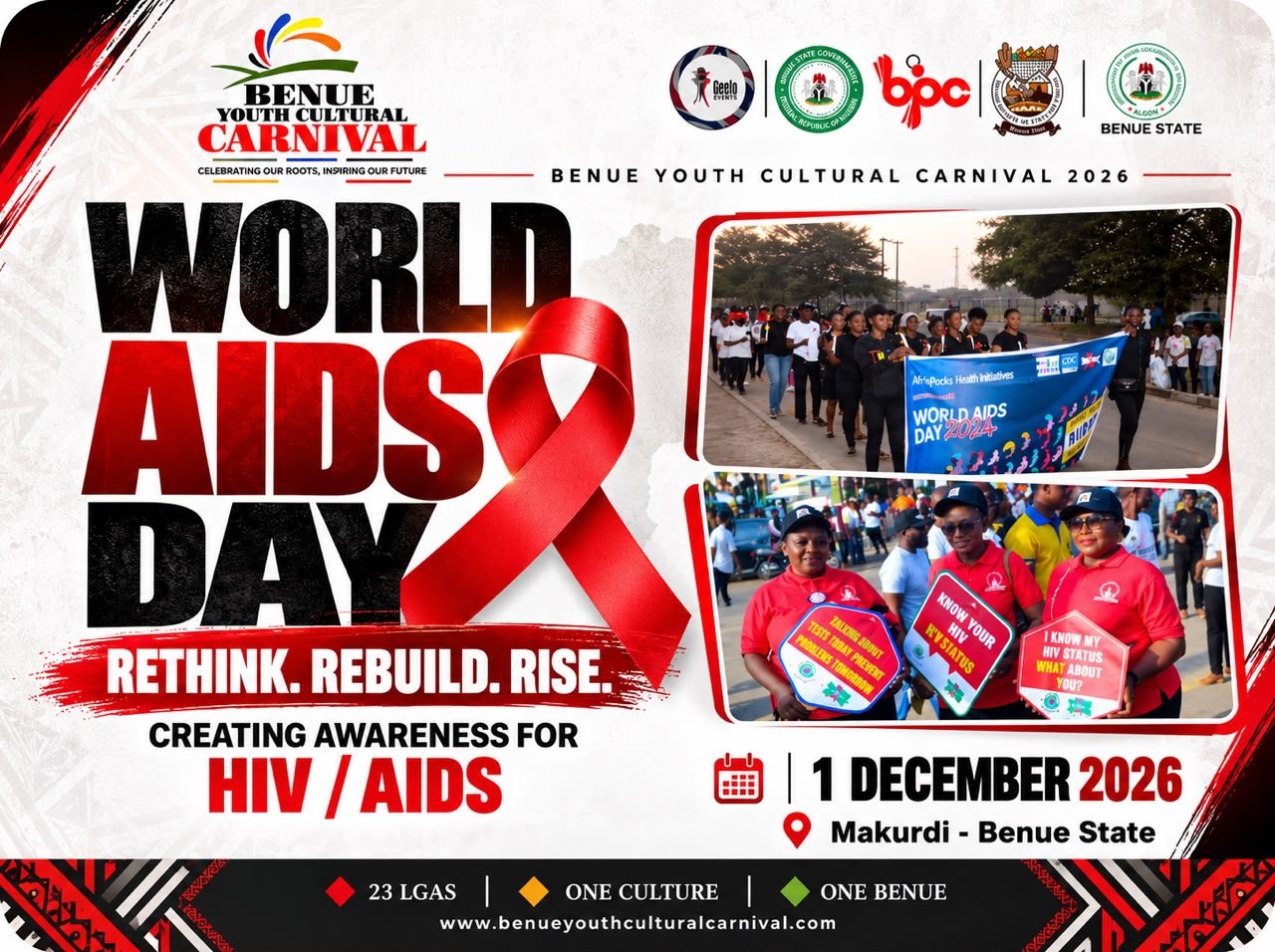
WORLD AIDS DAY COMMEMORATION
End HIV Stigma. Promote Awareness. Protect Every Life.
Part of the Benue Cultural Carnival
Date: 1 December (World AIDS Day)
Venue: To Be Announced
Organisers: Benue Cultural Carnival Organising Committee, in collaboration with relevant health agencies, healthcare providers, civil society organisations, and community health advocates.
About the World AIDS Day Commemoration
The World AIDS Day Commemoration at the Benue Cultural Carnival is a public health awareness initiative designed to promote HIV/AIDS education, encourage voluntary HIV testing, challenge discrimination, and strengthen community participation in HIV prevention and care across Benue State.
Using the carnival’s broad public reach and cultural platform, the initiative will bring together young people, community leaders, healthcare professionals, government agencies, civil society organisations, development partners, and members of the public to promote accurate information about HIV and AIDS.
The programme will encourage informed health decisions, responsible behaviour, early testing, access to treatment, and support for people living with HIV. It will also address harmful myths, misinformation, and stigma that prevent individuals from seeking testing, treatment, and other essential health services.
Through awareness campaigns, educational activities, community engagement, and partnerships with qualified health service providers, the commemoration will demonstrate that HIV prevention and care are shared responsibilities.
The initiative seeks to make public health education accessible, inclusive, and engaging while reinforcing the importance of dignity, compassion, confidentiality, and equal treatment for everyone.
Objectives of the Commemoration
The World AIDS Day programme aims to:
- Promote HIV/AIDS awareness: Provide accurate, accessible information about HIV transmission, prevention, testing, and treatment.
- Encourage voluntary testing: Connect interested participants with qualified providers offering confidential and voluntary HIV testing.
- Combat stigma and discrimination: Promote respect, inclusion, and understanding for people living with HIV.
- Engage young people: Encourage informed decision-making and responsible health practices among youths and other carnival participants.
- Promote access to treatment: Increase awareness of available HIV care, treatment, counselling, and support services.
- Address misinformation: Challenge myths and misconceptions surrounding HIV and AIDS.
- Strengthen partnerships: Encourage collaboration among health agencies, hospitals, community organisations, civil society groups, and development partners.
- Support community advocacy: Empower community members to participate in HIV prevention, awareness, and anti-stigma campaigns.
Key Activities and Programme Highlights
1. HIV/AIDS Public Awareness Campaign
An educational campaign designed to provide visitors and carnival participants with reliable information about HIV and AIDS.
Activities may include public health talks, educational materials, interactive question-and-answer sessions, awareness banners, and information booths.
Topics may cover:
- Understanding HIV and AIDS.
- How HIV is and is not transmitted.
- HIV prevention and risk reduction.
- The importance of voluntary testing.
- Available treatment and support services.
- The role of early diagnosis and consistent treatment.
- Myths, misconceptions, and discrimination associated with HIV.
2. Voluntary HIV Testing and Counselling
In partnership with qualified health agencies and authorised healthcare providers, the programme may provide access to voluntary HIV testing and counselling services.
These services should be delivered by trained personnel in accordance with applicable health guidelines and confidentiality requirements.
Participants will receive appropriate information before testing and guidance on understanding their results and accessing follow-up services.
Participation must be voluntary, and testing must not be a condition for attending or participating in the carnival.
3. HIV Prevention Education
This segment will promote practical knowledge about HIV prevention and available prevention services.
Healthcare professionals may provide information on:
- Correct and consistent condom use.
- HIV testing and prevention planning.
- Pre-exposure prophylaxis (PrEP) and post-exposure prophylaxis (PEP), where appropriate.
- Prevention of mother-to-child transmission.
- The importance of seeking qualified medical advice.
- The relationship between HIV treatment and prevention.
Educational activities will be designed to be age-appropriate, culturally sensitive, and respectful of participants’ privacy.
4. Anti-Stigma and Community Advocacy Campaign
The campaign will encourage communities to reject discrimination against people living with HIV and promote environments where individuals can seek healthcare without fear, shame, or exclusion.
Activities may include:
- Public declarations against HIV-related stigma.
- Community awareness messages.
- Testimonies from consenting advocates.
- Educational discussions with community and youth leaders.
- Campaign materials promoting dignity, acceptance, and inclusion.
The initiative will emphasise that HIV status does not define a person’s worth, abilities, or contribution to society.
5. Youth Engagement and Peer Education
Young people will be encouraged to participate in awareness activities, peer education, and community advocacy.
Possible activities include interactive health discussions, educational quizzes, drama, spoken-word performances, music, and other creative presentations that communicate accurate HIV prevention messages.
The use of creative expression will help make public health information engaging and accessible to diverse audiences.
6. Health Information and Referral Desk
A dedicated health information desk may be established to help participants access reliable information and identify appropriate healthcare services.
Depending on the participating partners, the desk may provide:
- HIV/AIDS educational materials.
- Information on testing locations and available services.
- Referrals to qualified healthcare providers.
- Information on HIV treatment and support programmes.
- Guidance on accessing relevant public health services.
The desk should protect participants’ privacy and avoid collecting unnecessary personal or medical information.
7. Health Agency and NGO Exhibition
The programme will provide an opportunity for relevant health agencies, hospitals, civil society organisations, community-based organisations, and development partners to showcase their HIV prevention and care initiatives.
Participating organisations may share educational materials, explain available services, provide referrals, and engage visitors in discussions about community health.
8. Commemorative Walk and Public Awareness Activities
Subject to approval by the organisers and relevant authorities, the programme may include a public awareness walk, symbolic ribbon display, or community advocacy activity.
Participants may carry messages promoting HIV prevention, voluntary testing, equal treatment, and support for people living with HIV.
All activities should be organised with appropriate safety, accessibility, and crowd-management arrangements.
Proposed Programme Schedule
The following is a suggested programme structure, subject to confirmation by the organisers and health partners.
| Activity | Suggested Duration |
|---|---|
| Arrival and registration | 30 minutes |
| Opening remarks and welcome | 15 minutes |
| Remarks from health agencies and partners | 20 minutes |
| HIV/AIDS awareness presentation | 30 minutes |
| Interactive health education session | 20 minutes |
| Youth advocacy and creative performances | 30 minutes |
| Voluntary testing, counselling, and referrals | Throughout the designated service period |
| Anti-stigma campaign and community pledge | 15 minutes |
| Closing remarks | 10 minutes |
Testing and counselling services should be scheduled and staffed according to the capacity of the participating health providers.
Potential Partners
The organisers may collaborate with relevant public and private healthcare institutions, including:
- Benue State Ministry of Health and Human Services.
- Relevant state HIV/AIDS control agencies and programmes.
- Appropriate federal public health institutions.
- Hospitals and authorised HIV testing and treatment providers.
- Civil society and community-based organisations.
- Youth associations and educational institutions.
- Public health advocates and development partners.
- Organisations representing or supporting people living with HIV.
Specific participating organisations should be confirmed before being announced as official partners.
Privacy, Confidentiality and Participant Welfare
The programme will uphold the dignity and rights of all participants.
Key safeguards should include:
- HIV testing must be voluntary and conducted by qualified providers.
- Testing results and personal health information must remain confidential.
- No participant should be required to disclose their HIV status publicly.
- Photographs or recordings must not reveal a person’s testing status or medical information without appropriate informed consent.
- Participants must be treated respectfully, regardless of their HIV status.
- Individuals requiring further care should be referred to appropriate healthcare providers.
- Health information and services must comply with applicable Nigerian laws and professional standards.
Expected Outcomes
The World AIDS Day Commemoration seeks to achieve the following outcomes:
- Increased public awareness of HIV prevention, testing, and treatment.
- Improved understanding of HIV transmission and prevention.
- Greater awareness of confidential testing and available health services.
- Reduced stigma and discrimination against people living with HIV.
- Increased engagement of young people in health education.
- Stronger collaboration between health agencies and community organisations.
- Improved access to appropriate healthcare information and referrals.
- Greater community participation in HIV prevention and advocacy.
Where feasible, organisers and health partners may assess the initiative through attendance figures, educational outreach, voluntary service uptake reported in aggregate, referrals, and participant feedback. Personal health information should not be included in public reports.
Join the Campaign
The Benue Cultural Carnival invites community members, young people, healthcare professionals, advocacy groups, civil society organisations, and development partners to support the World AIDS Day Commemoration.
Together, we can promote accurate information, encourage voluntary testing, challenge stigma, and build communities where everyone can access appropriate healthcare with dignity and respect.
WORLD AIDS DAY — Know the Facts. Protect Your Health. End the Stigma.
Part of the Benue Cultural Carnival: Celebrating Culture, Promoting Health, and Building Stronger Communities.